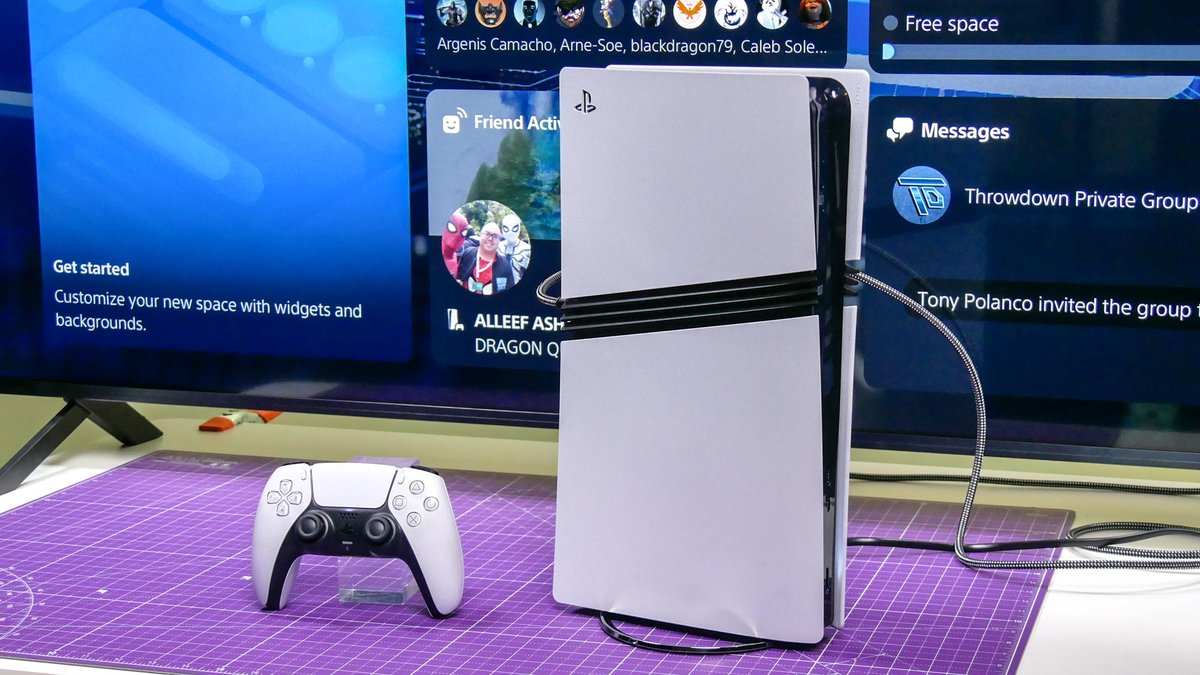
The High Price of Peak Performance: Unpacking the Common Criticisms and Drawbacks of the PS5 Pro
The PlayStation 5 Pro arrives with a powerful promise: to deliver the pinnacle of console gaming, a true rival to traditional PC rigs, right in your living room. It's an undisputed technical marvel, boasting significant upgrades designed to push visual fidelity and frame rates further than ever before. Yet, beneath the impressive teraflops and AI upscaling, lie some significant considerations that give potential buyers pause. When we talk about the common criticisms and drawbacks of the PS5 Pro, two major themes quickly emerge: its premium price tag and the current state of its optimized game library.
This isn't a console for the casual player; it's a meticulously crafted machine for a very specific, dedicated enthusiast. But even for that audience, understanding the trade-offs is crucial.
At a Glance: Key Criticisms of the PS5 Pro
- Premium Price Point: The most expensive PlayStation ever, with additional costs for essential accessories.
- Limited Immediate Game Optimization: Few new titles built specifically for its full potential, relying heavily on updates for existing games.
- Niche Target Audience: Only truly shines for gamers with high-end 4K or 8K OLED displays and a keen eye for subtle graphical enhancements.
- Peripheral Costs: Disk drive and vertical stand are separate purchases, adding to the total investment.
- Diminishing Returns for Some: The graphical leap might not justify the cost for those without optimal display setups or who prioritize content over cutting-edge visuals.
The PS5 Pro's Grand Vision (and Why It Matters for Critiques)
Before diving into the drawbacks, it's essential to understand what the PS5 Pro is and who it's for. This mid-generation refresh is less about revolutionary features and more about evolutionary power. It's built for those who chase the absolute best visual experience: crystal-clear 4K resolution, silky-smooth 60 frames per second (and beyond), and advanced ray tracing that brings virtual worlds to life with stunning realism.
Under the hood, you're getting a GPU that's 62% faster than the standard PS5, packing 16.7 teraflops of graphical grunt. There's also an extra 2GB of DDR5 RAM, a generous 2TB internal SSD, and cutting-edge tech like PlayStation Spectral Super Resolution (PSSR) for AI-powered upscaling. This is a beast designed to make your games look and run their absolute best, especially if you're hooked up to a massive 4K or 8K OLED screen. The catch? That power comes at a cost, both literally and figuratively.
The Elephant in the Living Room: Price and the Value Proposition
Let's address the most immediate and glaring drawback: the price. With a recommended retail price (RRP) of £699/$699, the PS5 Pro is the most expensive PlayStation console ever launched. For context, the original PS5 launched at $499, and the PS5 Slim, its closest contemporary, is $449 (with a disk drive). This price point immediately places it in a premium category, well beyond what many casual or even dedicated gamers are accustomed to paying for a console.
But the price tag doesn't stop there. In a move that mirrors the PS5 Slim Digital Edition, the PS5 Pro does not include an integrated disc drive. If you still cherish physical games or enjoy buying used titles, you'll need to shell out an additional £99/$79-$100 for an external disc drive. This effectively pushes the actual cost for a "complete" physical-media-capable console closer to £800/$800.
Adding to these peripheral costs, even the stand for vertical positioning is sold separately. While plastic feet for horizontal placement are included, the sleek, preferred vertical orientation requires another purchase. These hidden costs, while individually minor, accumulate to significantly inflate the total investment.
Whom is This Price Really For?
The PS5 Pro's price is undoubtedly a hard pill to swallow for the average living room setup. For someone with a standard HDTV or even an older 4K display, the extra expense might not translate into a noticeably superior experience that justifies the hefty investment. This is where the "specific gamer" aspect becomes a drawback for broader appeal. The console is explicitly targeting users with large, high-refresh-rate 4K or 8K OLED displays – screens that themselves represent a significant financial commitment. Without such a display, you're simply not getting the full return on your PS5 Pro investment.
Considering these financial realities, many might ask: Is PS5 Pro worth it?. For most, especially those on a budget or simply content with their current PS5, the answer may lean towards "no," making the price point a substantial barrier.
The Waiting Game: Content and Optimization Quandaries
A powerful console is only as good as the games it runs. And herein lies the second major criticism of the PS5 Pro: its full potential is largely unrealized at launch, dependent on future game releases and updates. While the hardware is undeniably impressive, the software ecosystem needs time to catch up.
Currently, there are no new flagship games built exclusively for the PS5 Pro's PSSR technology or its increased power from the ground up. This means that while existing games might receive "Pro Enhanced" patches, they aren't designed to fully exploit every single teraflop or the nuances of AI upscaling from day one. The initial improvements are seen more in updated older games, such as Marvel’s Spider-Man 2, The Last of Us Remastered, F1 2024 (which can target 8K or 4K 120Hz), and Alan Wake 2, which demonstrate better detail, more stable frame rates, and enhanced ray tracing. These are welcome upgrades, to be sure, but they represent a backward-looking enhancement rather than a forward-looking leap.
The Gap Between Potential and Reality
The "potential" of the PS5 Pro is immense. Its advanced GPU and PSSR AI upscaling could revolutionize console graphics, delivering resolutions and fidelity previously thought impossible without high-end PCs. However, that potential is a future promise. Today's reality is that you're buying a console for capabilities that developers have yet to fully tap into. It's a bit like buying a top-of-the-line sports car but only having access to city streets with speed limits. You know it can go faster, but you can't experience it yet.
This "waiting game" can be a significant drawback for early adopters. You're paying a premium now for benefits that might not materialize in their entirety for months, or even years, as developers learn to optimize their engines for the Pro's unique architecture. For gamers who prioritize a rich, immediate library of content over future-proofing, the PS5 Pro might feel like an investment in potential rather than current, tangible improvements. If your primary concern is simply playing the latest blockbusters and enjoying great stories, and you find a PS5 Slim or even a used standard PS5 sufficient, then the Pro's current content landscape might not offer a compelling enough reason to upgrade.
Beyond the Core: Niche Appeal and Accessibility Barriers
The PS5 Pro is not for everyone, and this deliberate niche targeting can be viewed as a drawback for the broader gaming market. Sony has clearly engineered this console for a very specific type of consumer: the dedicated enthusiast who prioritizes graphical fidelity and frame rates above all else, and crucially, has the accompanying high-end display to actually appreciate the difference.
- The Display Requirement: As noted, to truly experience the PS5 Pro's benefits, you need a large 4K or 8K OLED television or monitor. These are premium display devices, often costing more than the console itself. If you're playing on a 1080p screen or even an entry-level 4K TV, many of the Pro's enhancements will be lost or barely discernible. This creates an accessibility barrier; the console's full value is gated behind another, often more expensive, hardware purchase.
- Priorities Matter: For many gamers, content, storytelling, gameplay mechanics, and community features take precedence over pixel counts or ray tracing effects. If you fall into this category, the PS5 Pro offers little new beyond its visual prowess. The games you want to play will still be available on the standard PS5, albeit at a slightly lower visual fidelity. The experience of playing the game itself remains largely unchanged.
- The "Good Enough" Factor: The standard PS5 and PS5 Slim are already incredibly capable consoles, delivering stunning graphics and smooth performance for the vast majority of current-generation games. For someone whose current setup is "good enough," the Pro's incremental improvements might simply not be worth the substantial extra cost. It's a case of diminishing returns, where each additional dollar spent yields a smaller, less impactful enhancement for the average user.
Design Choices with Caveats
While the PS5 Pro's design is sleek and slightly more streamlined than the original PS5 (due to the lack of an integrated disc drive), certain choices can be considered drawbacks from a user convenience perspective:
- Detached Disc Drive: The decision to sell the disc drive separately, while contributing to a slimmer profile and offering a "digital-only" option, is inconvenient for those who still prefer physical media. It means an extra peripheral to connect, manage, and power, disrupting the console's otherwise clean aesthetic. It also contrasts with previous "Pro" models which typically integrated all functionalities of their standard counterparts.
- Vertical Stand as an Add-on: Packaging the vertical stand separately feels like an unnecessary nickel-and-dime tactic for a premium-priced console. Most users prefer to stand their console vertically, and requiring an additional purchase for this basic functionality can be frustrating.
- Panel Incompatibility: The new matte finish and design, while appealing, means that existing PS5 or PS5 Slim faceplates are not compatible. For those who enjoy customizing their console's look, this limits options to only PS5 Pro-specific panels.
Performance Nuances: Is the Upgrade Always Obvious?
The PS5 Pro brings impressive raw power, with a 62% faster GPU and improved memory. For games optimized with "Pro Enhanced" patches, the benefits are clear: crisper images, more stable frame rates, and enhanced ray tracing effects. Games like Marvel's Spider-Man 2 and Alan Wake 2 certainly look and feel better. However, it's important to set realistic expectations about the universality of these improvements.
- Optimization is Key: The most significant gains are reserved for games that receive specific optimization patches. Without these, a game might run slightly better due to raw power, but it won't fully leverage the Pro's unique features like PSSR. This means that not every game in your library will suddenly transform into a visual masterpiece.
- Subtle vs. Transformative: For some, the improvements, while technically significant, might still be subtle rather than transformative. A stable 60fps is great, but if a game already ran at a mostly stable 30fps or 45fps on the standard PS5, the "feeling" of the upgrade might not be as dramatic as moving from 30fps to 60fps on a PC. Ray tracing enhancements can be beautiful but might only be noticeable in specific lighting conditions or reflective surfaces, not a constant, in-your-face difference throughout gameplay.
- The Future is Unwritten: While the PS5 Pro promises higher resolutions and frame rates, it's also worth noting that it can still only deliver what developers aim for. If a future game is extremely demanding, even the Pro might struggle to hit perfectly stable 4K 60fps with full ray tracing, potentially requiring developers to make compromises. The full potential of the PS5 Pro still awaits games that are specifically built with PSSR in mind, rather than just patched to take advantage of its raw power. This means the biggest, most obvious graphical leaps are yet to come, and are dependent on developers fully embracing the new hardware.
Interestingly, despite its increased power, the console remains remarkably quiet during gameplay, which is a positive aspect that defies a potential drawback of more powerful hardware often meaning more noise.
Making an Informed Decision: Is the PS5 Pro Right for You?
The PS5 Pro is a remarkable piece of hardware, pushing the boundaries of console gaming. However, its common criticisms and drawbacks of the PS5 Pro — primarily its high price point and the current state of its optimized game library — mean it's not a universal recommendation.
Here's a breakdown to help you decide:
Consider Buying the PS5 Pro If:
- You prioritize graphical fidelity and frame rates above all else. You crave the absolute best visual experience a console can offer.
- You own or plan to purchase a high-end 4K or 8K OLED TV/monitor. Without one, you won't fully appreciate the Pro's capabilities.
- You are a dedicated enthusiast who doesn't mind paying a premium for incremental, cutting-edge improvements.
- You are comfortable investing in future potential, understanding that the console's true power might only be unleashed with upcoming, purpose-built titles.
- You can find it on discount, which would alleviate some of the sticker shock.
Consider NOT Buying the PS5 Pro If: - Graphics and performance are not your absolute top priority. You're content with the already excellent experience offered by the standard PS5 or PS5 Slim.
- You are on a budget. The combined cost of the console, external disc drive, and vertical stand can be prohibitive.
- You primarily care about game content and new experiences, rather than how those experiences look at their absolute best.
- You don't own a high-end 4K or 8K display. Much of the Pro's value will be lost on a lesser screen.
- You feel your current PS5 Slim or even a used PS5 is perfectly sufficient for your gaming needs.
Ultimately, the PS5 Pro stands as a testament to engineering prowess, designed for the discerning gamer who demands the very best and is willing to pay for it. However, for many, the investment might simply be too high for a console whose full potential is still a future promise, awaiting the next generation of truly optimized titles.